Thursday, August 06, 2009

First of the Thimbleberry Picking

I've been watching those thimbleberry bushes from early spring, when they were mere stalks and just sprouting greenery, to June when the bushes were waist -high and topped with white-petaled flowers, to now, in early August, with the first berries turning soft and red.

Last Saturday, along a section of Pilgrim River, for a stream monitoring workshop, we were walking through the brush on a narrow trail, amidst lush thimbleberry bushes, not quite ripe. There were signs posted, handwritten, saying "Trespassing" "No Berry Picking". So the group of us, Trout Unlimited types, were there to learn stream monitoring, but I thought about thimbleberry jam as I walked along, Just about time to start pickin', I said to myself...

Yesterday, in the midst of preparations to go over to Pictured Rocks for guiding a trip for a long weekend, I couldn't stop myself. I grabbed a can and went out to our thimbleberry patch for a quick picking of first-fruits of the season.

The fruit stood out red among the greenery. There was generally one red thimble among half a dozen pale pink unripe berries. The rich forest loam smell at dusk was rising around me. A distant hermit thrush was piping out the day. The blush of crimson on my finger tips and raspberry richness from those ripe fruits were filling my senses. I picked the tender thimbles steadily over just a few minutes that stretched into nearly an hour, until the ebbing light made the red turn to darkness.

At home I vacuum bagged the precious fruit and put it in the freezer for combining with later harvests of thimbleberries. Much more is yet to come...

Tuesday, August 04, 2009

Isle Royale, July 6-11, Slow Goin'

A father and son in their own boats - it sounded like it would be a good trip - the chance to put down some miles and have a great time without learner anxiety...
When I arrived at the Keweenaw Adventure Co., in Copper Harbor, the 14 year-old pictured below was sitting on the narrow walkway into the shop, with a padded neck brace on and with a knife out, whittling on a stick. On meeting his father in the shop, I found out that in last night's hotel room that his son had awakened with a stiff neck, so he had gone to the emergency room of the local hospital for relief. The brace was worn periodically throughout the trip, whenever the boy thought of it ...
After the safety course (which was lengthy getting the youngster back in his boat), I suggested they rent a tandem but they were determined to use their own personal kayaks. With that decision the slow mode for the whole trip was established. With emotional dynamics being what they were between father and son and the overall bulk of their gear and kayak limitations we stayed in the vicinity of Rock Harbor and Moskey Basin with a side jaunt of father and I up to the entrance to Merrit Lane and back to Rock Harbor Campground on our last night. The headlamp trip back from the Lane was the highlight for me. The father's excitement and fears in the chop, with our route taking us close to the frothy basalt was a sensory delight.
Visiting Mr. and Mrs. Les Mattson, at the Edison Fishery in Moskey Basin.
A rugged spirit tree on Caribou Island
Posted by Picasa

Saturday, June 27, 2009

Isle Royale Summer Solstice Trip 2009

I had a full group of paddlers for this year's Isle Royale Summer Solstice trip during June 19 to the 22nd.
The trip was sponsored by General Mills of Minneapolis, MN and 2 employees and their spouses came on the trip along with the father of Jon, who was married to Renae. The other couple was James and Heather.
The trip started out with rain the night before at Copper Harbor. The rain continued in the morning with intermittent fog on the 3 hour ferry ride to the Island.
Paddling within the fog bank made my GPS receiver important for
accurate navigating up on the northeast side of the Island
between the Palisades, Merritt Lane and Tooker's Island.

The weather was basically clear when we arrived in Rock Harbor, unloaded the gear and schlepped it to the beach area, ate lunch and then loaded up the kayaks. Our destination was Caribou Island. Within 10 minutes of paddling out of Snug harbor a dark and ominous cloud bank appeared from out of the northwest and promptly poured rain on us. After 10 minutes, within the time it took us to pull to shore and don rain gear, the rain stopped though my anorak felt good with the shelter it provided my wet body from the cool wind.
When we arrived at Caribou Island we were surprised to find out that both of the shelters were already taken... tenting it was our only option unless we wanted to paddle further to Daisy Farm or back to 3 Mile or Tooker's Island. We had just missed out on a shelter that had been taken by 3 fishing brothers from Ishpeming, MI, who we had seen zoom past us from Rock Harbor to Tooker's in their speed boat. I cooked the whitefish alma'den over one of the few fire rings on Isle Royale. I was quite happy to get into my Moss Outland tent rather than the open front shelter as the temperature was rapidly dropping down to what I estimated was the upper 30's.

Our first full day of paddling started in the late morning; we waited for the one shelter to be vacated and moved in our gear. A short paddle to the Rock Harbor Lighthouse, where Jon was very interested in viewing the displays, then over to Edison Fishery to talk to Les Madsen, then one of the group's highlights, viewing the boneyard at the wolf and moose study site at Bangsund cabin. Both Rolf and Candy Peterson were there, so we had a good sit-down talk with them as well as a stand-up question and answer session out in the boneyard with Rolf.
We arrived back at the shelter on Caribou Island after an extended paddle tour outside the harbor area and heading southwest toward Saginaw Point. Tom and Renae elected to head back to Caribou and then we followed a bit later.
The next day we packed up and headed first back to Tooker's Island and then for a fast trip up on the north side of the Island. James and Heather wanted to put in more miles while Tom and Renae decided to paddle with us to Rock Harbor and hang out there. Jon, James, Heather and I then paddled up the outside of the Island and past Tobin Harbor to Merritt Lane then past Blake Point to the Palisades. The temptation to keep paddling west into the 5-Fingers was strong but Heather was reluctant to continue on and a gray bank of fog was moving in on us rapidly from the east. It was a bit of a "slog" in the fog with Heather anxious to not be left behind in the fog (don't worry Heather, we will always wait for you!), but we were finally greeted by Tom as we emerged out of the fog close to his sea-side table at the old Rock Harbor Lodge, where he was having a cup of coffee.

We were all anxious to get back to camp on Tooker's Island so we headed into the thick fog with the GPS orienting us on Tooker's. There was a motor boat seemingly going in erratic movements as we paddled out of the Snug Harbor area southeast toward Tooker's. The farther we paddled to the east, the closer the larger boat's sound grew. I began to feel like we were being hunted and I called for everyone to bunch in close together and I started to blow my whistle as the boat grew very close. Out of the fog it loomed - a NPS cruiser which was indeed zeroing in on us with his radar. The ranger came out of his cabin and asked what we were doing. I nearly asked him the same thing, but said that we were on our way to our camp on Tooker's. He said that we should be hugging the shore, at which I pointed to the fog-dimmed outline of the shore and said that was what we were trying to do. He was concerned that there were some fishermen on a boat who had just arrived at the island and were trying to find a place to dock. He was also concerned that we might be hit by a boat without radar. He also thought that we should have lights on our kayaks in the fog. He had to be the critic on something but finally wished us a good stay on the Island and motored off. We paddled back to our last night on the Island, glad to have a shelter to stay in for the night. Soon after arriving, the fishermen came in and docked for the night. It was 4 young Calumet guys and an older man. They slept on the boat as they hadn't gotten a camp permit. In the still night air I could hear them laughing and talking as they downed their beer and drifted off to sleep to the sound of their urinating into the water from the dock.


After rain and fog, our world focused into clarity


Banks of fog would rob us of a view quite abruptly,
like in this non-view of Merrit Lane looking outward
toward Tobin Harbor


Posted by Picasa
Just before we headed out from Tooker's Island to catch the Ferry
back to Copper Harbor. Our group was dressed for the weather!

Thursday, June 18, 2009

Spring Time '09


The second guided sea kayak trip (June 12 - 14) was "Paddling the Keweenaw" with 2 men and myself. We went from Bete Gris, on the east side of the peninsula and finished at Copper Harbor. The scene above is Craig passing a distant Gull Rock Lighthouse, looking toward the mainland, after visiting Manitou Island. Our way back to the mainland is a 3-mile paddle. No facilities and camping where you will, the Keweenaw is a different experience than camping where I'm going this week, Isle Royale, where my group of 6 will be camping in designated camp sites, probably with shelters and picnic tables.
Posted by Picasa

Spring Time '09

With the anticipation of so many people in the outdoor industry and enthusiasts from all over the country, we journeyed in March down to Madison, Wisconsin for Canoecopia, the largest outdoor expo in North America.This is a view of our booth, which publicizes Keweenaw County and those businesses that make their tenuous home in this mostly forgotten peninsula that juts out into Lake Superior.


A tundra scene from our trip up on Hudson Bay. BeginningApril 2 and ending on our return to Minnesota on the 15th, Wintergreen Dogsled Lodge (where I work as a dog team guide) journeyed up to Thompson, Manitoba where we loaded 20 Inuit dogs, 3 freight toboggans, all of our gear, and ourselves onto the Tundra Train for a trip up to Wapusk National Park, where we hopped off the railroad track onto the boreal tundra for a dog team trip through the polar bear denning grounds, camping at eskers and travelling out to the coast of Hudson Bay and then travelling up to Churchill, the end point of our dog taem trip.


This is a scene from the first sea kayak trip of the season, June 2 - 5. I had been back from taking the Wilderness First Responder class in Boulder Junction, Wisconsin (May 16-24) with a week to relax and get my gear together before going over to Munising for this trip. My son Muir and I guided a group of 11 boy scouts and their 2 adult leaders on a paddle and 4 day camp on Grand Island. Here is a few of our hearty voyageurs in Trout Bay.


A common scene on Mackinac Island, where Lynn and I went June 7th through 9th to bicycle, see the sights on this historic place in celebration of our 30th wedding anniversary. Cars are not allowed on the island, but we had a stress-free time of getting around by bicycle and foot, staying at a Bed and Breakfast just out of town.
Posted by Picasa

Tuesday, May 12, 2009

Spring Across The North

It's almost the middle of the month of May, but the leaves are only beginning to show their green growth (willow). Birds from rose breasted grosbeaks to phoebes to pine siskins to goldfinches are making their nests (the phoebe is nesting under the garage porch eave for the first time in 15 years) and the Canada geese are already parading on our waterways with their goslings.
Our garden is peaking a bit of green cold crops from under the coat of mulch, warmed in their bed. The cold crops are tolerant of the seasonal dusting of snow (yes, still possible, as last weekend showed) and few hours of freeze at night that characterize our cool Lake Superior spring.
The coyotes were yipping and carrying on at our field and woods edge last night at around midnight. They woke me at the advent of my slumber, which I was glad for - to hear them roust about closely. I will go out to our back field to check the red pines that we planted and have been watering. One of them was dug up and dead; noticed on Sunday when I was carrying water from the stream to water the trees. I wonder what chose to dig the little seedling up. No tracks could be seen.

I am beginning to pack for the 9 day Wilderness First Responder class that I am taking in Wisconsin over the next week plus. Tough time to be leaving, with so much to be done around here, but it seems that each season has its own reasons for me to stay home...

Monday, April 27, 2009

Reverence For Nature

The historic Episcopal Church in Eagle, Alaska


What is the place for reverence in viewing "the wonders of the natural world"? Pantheism, the worship of nature, is what many fundamentalist Christians would call showing excessive attention and concern for the fate of the flora and fauna of natural areas. The Christian Bible cautions the believer to worship the Creator, not the creation. The person who doesn't believe in God (or Jesus Christ as the son of God) is termed a pagan and is to be pitied and if possible shown "the only true way of the cross of Christ." There is some room in more liberal churches for those who want to practice "creation care" but for those who follow the fundamentalist church the creation care movement is suspect for offering allegiance too closely to nature's creatures rather than Creator.

Rick Bass, a leading writer and environmentalist, who lives in a rural area in northwestern Montana, addresses the question of reverence for the creation, as put to him by some seemingly Christian "friends" in his community. His answer, in the following essay, told after an encounter with a female painted turtle, is both humble and wise.


This essay was in the May 2009 issue of the Shambhala Sun Magazine


The Turtle

by Rick Bass


Surely I am becoming a pagan; and not through any formal rejection or even dubious re-examination of the mystery of my childhood, Christianity, but more through the evolution of some closer fit between my spirit and this Montana landscape. So glorious does this engagement feel some days that I must confess, in the beginning I wondered if I was not being tempted somehow by the archetypal devil himself—for surely anything this pleasurable had to be sinful, even lustful; and worst of all, placing myself, rather than any God, at the center of things.

I’m not even sure what a pagan is exactly—perhaps I’m misusing the word—but yesterday, after I had dropped the girls off to play at a friend’s house over on the backside of the valley, just across the state line, in Idaho, I encountered a painted turtle crossing the gravel road, traveling from one marsh to another, and my spirits soared, at the life-affirming tenacity of her journey, her crossing, as well as at this most physical manifestation that indeed the back of winter was broken; for here, exhumed once again by the warm breath of the awakening earth, was the most primitive vertebrate still among us.

It was not a busy road, but I stopped anyway and picked up the turtle. Her extraordinarily long front claws, so like a grizzly’s, confirmed that she was a female—the longer claws are useful in excavating a nest in which to lay her eggs—and I put her in a cardboard box to show the girls upon my return.

I continued on my way, down across the giant Kootenai River and into Bonners Ferry, to run errands, and then drove back to our friend’s, where all the children examined the turtle with appropriate and gratifying fascination. They learned the words “carapace” and “scute” and “plastron,” and a bit of the natural history of the painted turtle, but what I suspect lodged deepest in their memory was the mesmerizing hieroglyphics, or cartography, of red and orange swirls on the underside of the shell; and the image that probably went deepest into either their consciousness or subconscious, into the matrix of memory and formative identity—or so I hope—was the three of us stopping on the trip home to release the turtle on the other, safe side of the road, pointed down toward the larger marsh—the direction she had been headed—despite the fact that there was still no traffic.

We kept watch over her then, as she slithered her way through last autumn’s dead grass, and the newly emerging green-up, toward the cattails and chilly dark waters that would receive her and the future of her kind.

I hoped the specific tone of sky at dusk, the call of snipe circling overhead, and the shapes of these specific mountains—these mountains—were imprinting themselves, this one April, as deeply in the minds of my young daughters, along with this leisurely, almost nonchalant yet considered act, as deeply as the chemistry of a river is said to imprint itself upon the bodies of young salmon. These are the sights and scents and tastes and sounds and textures, the logic and the reason, that hopefully will help form the matrix of their childhood and their individual characters.

I’m grateful to that one turtle for the opportunity to help show them consideration. I’m grateful to the color of that sky at dusk, and to the unique and specific shape of Haystack Mountain, to the north, and to the scent of the pine and fir forests, early in the spring, for helping form that calming matrix, as sense-filled and tangible as a bough of fir branches spread beneath one’s sleeping bag on a camping trip far back into the mountains, the mythic mountains of childhood.

We stood there and watched her clamber on down into the dark waters. We don’t have turtles in our marsh. Our marsh is one of several in a chain of wetlands that is perched at the edge of an upthrown fault block that parallels the valley’s main river. The closest turtles are but a quarter of a mile away, down in one of the huge wetlands created by the river’s high waters each spring; but there are no turtles in any of the marshes on that shelf up above the valley—the shelf on which our marsh, and several others, is perched.

We are a hundred feet too high, it seems, for turtles—an elevation of thirty-three hundred feet, rather than the valley floor of thirty-two hundred. Maybe, however, the warming earth will allow this marsh to receive them in my lifetime. Or it might take a hundred years, or two hundred, beyond that, but no matter; I dare not tinker with so ancient and established of a species—trying to coax it into a place it might never have been before. Perhaps this kind of reverence, respect and reverence, more than anything else, defines a pagan; I don’t know. Whatever it is, I know that I feel it strongly.

If this kind of attentiveness to, and gratitude for, the creation is excessive, or unseemly in our species, or, worst of all, ungodly, then I apologize for having been snookered by the dark forces; but know that I will go to damnation for having been an ignorant or mistaken man, rather than an evil one.

Some of my neighbors—friends—frown on the zeal, the restless tenor, of my environmentalism. They counsel me that with eternity at stake in the unending afterlife, there is little point or economy in getting so fretted up about clear-cuts when our mortal time here is so temporal, and the earth is but a proving grounds for the far greater and lasting struggle of our souls, our eternal salvation.

And sometimes—when I’m really tired of the struggle—I want to believe them.

But someone—their God, my God, somebody’s God—put the spark and light of peace and joy and worship and awe in my heart, when I stand in a cathedral of ancient cedars, or when I am far back in the distant mountains, so close to the sky and a scale of time greater than my own brief stay—and that spark tells me that for me, activism is a form of prayer, a way of paying back some small fraction of the blessing that the wilderness is to me; a way of celebrating and protecting that creation, and a way of giving thanks.


Posted by Picasa

Around Grand Island


August, 2007 was an exhausting month after such a busy July. None-the-less, I was totally grateful for the work outdoors as a guide. I had herniated my L-5 disc in the early spring while guiding a dog team trip in northern Minnesota. After suffering through misdiagnoses and ineffective physical therapy followed by surgery and recuperation, I had jumped right into leading trips out of Munising and out to Isle Royale. I actually started doing trips at the end of June, with my son's help on heavy lifting.The first trip was to Pictured Rocks and there were many that followed. The previous 2 trips were an attempt by a large group to go around Grand Island and a 2 couple trip "on a budget" to Isle Royale. Both of these trips were disappointments for me, though not for the clients. The attempt to go around Grand Island was with a ski club out of Milwaukee. The members were all more into drinking and partying, many lacked experience at kayaking, and some were totally out of control as far as following a wilderness ethic. Three dysfunctional women would jump out of their kayaks when we would stop, sit down in the water and urinate while still in their wet suits. I thought it was different that they would have such an affinity for the water that they would sit down together for a time so often. Then on the last day one of the other participants told me what was up with those 3 women. I told Carl, the trip outfitter to be sure and wash those wet suits extra cycle.
We didn't go all around the island on that trip because of the group being large and not sticking together, and with the fog and windy weather that we had, I didn't feel comfortable leading them.
The other "cut-rate" trip with 2 middle aged couples from lower Michigan to Isle Royale was tough because they were all staying in the lodge and supplying the food. The major verbal topic was complaining about how the Rock Harbor Lodge and Restaurant was a rip-off. They were supposed to supply me with food and they were reluctant to do so, other than white bread and bologna sandwiches and cheap sugar cookies for lunch. The one time that they ate in the lodge with me they stiffed the waiter.
Right after doing the two disappointing trips, I had to rush back to Munising for a trip with the repeat customers from the year before, the Ripper group, named after Wendy Ripper, who did the coordinating with Carl, the Northern Waters owner and outfitter for the group of 5 women. I had met the ladies last year when they had switched over from then-defunct Great Northern Adventures out of Marquette, Michigan. One of the guides at GNA, Susan Bellamy had built up a great relationship with the Ripper party over a period of a few years. They had gone to Pictured Rocks but weather had limited their trips. They had gone to Grand Island into Trout Bay and Murray Bay with Susan.
The group members were Wendy, Jeannette, Jill, Julie, and Casey. All from the suburbs of Detroit, active in outdoor sports, all but Casey with kids and husbands. Jeannette was a fairly good paddler and could roll her kayak. She lived on a lake outside of Detroit and had a sport kayak that she would take out and practice with. She said that she always used ear and nose plugs as the water was warm and had a lot of bacteria in it.
All 5 ladies arrived at 9 AM in Jill's SUV. They were ready to go. Carl didn't have the food ready, actually didn't arrive until later. So we got their gear sorted out and did what we could and then got out on the water during the afternoon, heading out from Powell Point over to Grand Island and then going up the west side.
As the guide there is quite a bit of pressure on a trip such as this regarding making it a safe experience, comfort of participants on and off the water and arriving at campsites with enough time to be set up and fed before dark Getting a much later start than was optimal would make it hard to really have the surety that the aforementioned items would occur.

Casey, being new to kayaks was struggling to use her rudder and keep a straight line of travel. Her paddle stroke needed developed, and so I worked with her on paddling efficiently as we went along.

After 3 miles we stopped for a break on the lower west side of the island, but it was still too early to think about making camp. One place that we had in mind for spending the night was the Juniper Flats group site. There were a number of people who we saw there, so that wasn't looking like a possibility. Just past there is a beach and stairs that go up to the two-track road which leads to Hardwood Campground. No one was there but it is a long walk with gear to the campsite. Another not great possibility for us. Beyond the stairs is a little cove that has a waterfall that falls into the cove 10 feet or so out from the shore. Jill was the first to paddle under the drought diminished water. Then Casey tried but ended up beaching the bow of her boat on the shore. After a bit of a struggle with raising her rudder and pushing herself off she paddled under the falls. Then off we went, to parts unknown as far as camping. There was an eagle perched on a dead tree on a tall rock bluff. The rock is all tan and maroon tinted sandstone on the west side; mostly cliffs , which makes for awesome scenery but with few places to land and camp. There is a low arch before the a beach that I call the Northwest Beach. With the low water it was hardly possible to pass beneath it. Even the beach beyond it is low enough water that landing there on the mostly rock shelf means dragging the kayak in shallow water for a distance. We chose a back country campsite beyond with fair beach access. It was soon to be dark so that was the deciding factor in finding a campsite. Jill had a large tent that would fit all five and I busied myself with getting dinner of tacos while their tent went up. We were treated to a bit of Northern Lights after full dark, which capped our long day.
The next day dawned clear and just right for getting out on the water early. After a quick breakfast and pack-out of the kayaks, we were on our way. The arch in the photo was soon encountered after our launching from our back country camp site. Large enough, with deep enough water, even during this year of very low Lake Superior water levels, the arch would easily fit out kayaks for a few pass-throughs and picture taking sessions. Casey was doing better with her paddle strokes and maneuvering in tight places.


Here is the arch-cave from the inside. More than enough room to accommodate the party of kayakers.


We passed the north light house, on it's high cliff above, with just an out-building showing unless you paddled out in the lake a few hundred yards. We stayed out from shore and made for the northeast point, with one pit stop en route. As we paddled along in the sun, a monarch butterfly, fluttering along from the open water to the north, landed on my bow deck. There it stayed, catching a rest, fanning its wings slowly. As I looked about me, in the firmament and over the water, more and more butterflies came into focus. The water gently pulsing around my kayak carried on its surface the drowned shapes of monarchs; those who, on their migration across Lake Superior from the Canadian shore some 70 miles distant, had almost made it to landfall on the south shore. What a wondrous migratory epic we had paddled into on our route around Grand Island! The monarch on my deck fanned more frantically and lifted off, assured of arriving at the stepping stone of Grand Island before flying on to Mexico in due time, if the butterfly's migratory impulse wasn't ended by predatory weather or creature. As we paddled on and made it around the northeast point, the sky began to draw into mottled gray and blue. A west wind was pushing clouds onto our sky-view. I was getting a bit anxious with the weather looking more squally, as well as concern for getting a preferred campsite just outside of Trout Bay. The group's favorite camp site was Cobble Cove, which has a dramatic rock shelf overlooking the whole of Trout Bay. My groups use the rock shelf as a kitchen and living room. The sheltered camp site is used solely as a bedroom. The light and view from the shelf "living room" is so appealing that most campers at the site don't want to leave there until the last rays of the setting sun are extinguished. A possible problem was if another party was already at the site, then we would have to go elsewhere. When we came around the cliffs of the northeast opening of Trout Bay, I stopped and used my binoculars to glass the cove area and it did look as though there was a large power boat at the site. I told the ladies about my observations and said that we should paddle over and see if the boat owner was camping or just visiting the site. As we got closer to the cove it appeared that people from the boat were out on the rock shelf as well as in the cove area. When we paddled into the cove the boat looked to be getting underway. I hailed the boat skipper and he said that they weren't camping, though he wished that they were, "at such a beautiful campsite." So, with relief and elation the Ripper party landed and set up a bucket brigade to shuttle tents, food and camping gear up the steep approach to the camp site and rock shelf. The squall clouds had blown out of our area and it looked as though we were going to have sun and clear skies for our dinner and evening at Cobble Cove.


The Ripper party, paddling into a band of squall clods on Grand Island

With everyone working, on what we thought would be the final dinner on our trip, I soon had a filling meal of Carl's "Guide's Delight", a chicken salad, with Oreo cookies and fruit for dessert. A couple of women in the party broke out wine for watching the sunset. I was content to sip my cup of wine while washing the dishes. The last of the sun was warm and relaxing, not giving any clue about the real possibility of high winds on the morrow. The NOAA weather report warned of a possible small craft advisory on the morrow, but there was no point in worrying about tomorrow when there is nothing to be done other than enjoy the camp, sunset and sound sleep...
Morning dawned with gray moving clouds and a wind that was increasing by the minute. As the wind increased the waves jumped up, moving larger and steeper out into the eastern open lake. I started the stove to heat water back in the woods, sheltering the stove flame from the wind. We ate out in the wind on the ledge and talked about the non-possibility of paddling back to Sand Point for pick-up. No way were we paddling out in the big waves and cold water. One of the eventualities of paddling on Lake Superior was getting wind and wave-bound and this was one of those times. So we hung out on the rock ledge and read in our tents for the day. Spouses and children back home were apprised of our plight by cell phone - marooned on an island - and so the day moved on. I was looking at having a rushed few days following,this trip, as I had an Isle Royale trip scheduled to begin, with 1 day after this trip to prepare - that's 1 day if I wasn't stranded. All I could do was put thoughts of stress and dirty laundry out of my mind and concentrate on being ready for a quick getaway in the morning. Typically the wind began to die just before sunset, but the waves stayed up and Casey was a bit unsure of paddling in the rough water, so we opted for staying the night and making a quick getaway in the morning.

The water and wind were both down in the morning when we made our early getaway and a couple hours later we slid in on the Sand Point beach, where we unloaded gear, walked down to the Park Service headquarters where Wendy's SUV was and loaded up. It was triumphant but sad farewells as the group left me behind in the parking lot, waiting for the shuttle to load the kayaks onto the trailer and begin a hurried trip back to the next kayak trip out of Copper Harbor.


At the shelf "living room" at the Cobble Cove camping site. This tranquil evening sunset became disturbed by morning with high winds and waves, stranding us for the next day.
Posted by Picasa

Wednesday, April 22, 2009

Earth Day Wednesday

After a sloppy snowstorm that started on Sunday, this day dawned in pacific tranquility. The slowly melting snow pack, formed by the soggy snow over the crusty winter snow-remains, is a fitting Earth Day setting for spring on this Superior Peninsula.Since I left the moderating winter weather of Hudson Bay last week, I have been slogging through getting back into a domestic mindset of reestablishing the rituals of home and hearth obligation. No more sustained nomadism on the tundra and obligation to dog team and camp life.
Earth Day, a spiritual sister to Easter, is here with little societal reverence or acknowledgment. Planting trees is one bit of homage that I'll indulge in, though planting at a bit more southern latitude makes more sense if in conjunction with this date. And my planting is also a bit self-serving (on my own land), but couched in a biocentric sensibility.

Joseph Romm, climate change thinker and gadfly, writes on Alternet :

http://www.alternet.org/water/137586/on_earth_day%2C_forget_about_the_planet_--_we%27re_the_ones_who_are_screwed/

Romm believes that the concept of an Earth Day is flawed and somehow hypocritical - that what we need is to relate to the baser human world-view of anthropocentrism to get people on board and vested in the anti-climate change movement. At least that is my reading of what he is cynically (but wisely) getting at. He may be right...

Monday, April 20, 2009

A New Vision

We need another and a wiser and perhaps a more mystical concept of wild animals. Remote from universal nature, and living by complicated artifice, man in civilization surveys the creatures through the glass of his knowledge and sees thereby a feather magnified and the whole image in distortion. We patronize them for their incompleteness. for their tragic fatefor having taken a form so far below ourselves. And thereby we err, greatly err. For the animal shall not be measured by man. In a world older and more complete than ours they move finished and complete, gifted with extensions of the senses we have lost or never attained, living by voices we shall never hear. They are not brethren, they are not underlings; they are other nations,caught with ourselves in the net of life and time, fellow prisoners of the splendour and the travail of the earth.
-- Henry Beston, The Outermost House

Thursday, March 19, 2009

A Long and Solid Winter

What a winter we've had behind us - spring is before us - much for me to be thankful for in winter weather that I revere. The dog team trips that I have guided have been fun, the ones that I have yet to do are beckoning me - and the big one to Hudson Bay is drawing near!

This winter has been a mixed experience for me health-wise - and I couldn't get myself motivated to write or blog over the last few months. A bout of skin cancer, further sciatica and consequent physical therapy left me feeling my age. I had tennis elbow that was the result of or contributed to byhand splitting a winter's wood. I got a hydraulic log splitter too late in my wood processing for this year, but when I got a simple forearm band for tennis elbow, the pain in my arm began to disappear. When I did dog team trips, the back problems tended to diminish.
We had way over 200 inches of snow this year, extended cold made it good that I was home to keep moving the snow and keep the home wood fires blazing. When I was gone to Ely, Lynn would be at work all day and come back to dying coals in the wood stove and 2 dogs that were cooped up inside all day, as well as snow piled up in the driveway.
I have pictures of winter happenings and adventures that will have to wait for a later time to post. Come to think of it, I didn't post last summer's sea kayak trips and can see that I've been slacking a lot more than just this winter. So the last of April I'll try to get motivated to post, after I'm back from adventures at the "northern sea".


Monday, November 17, 2008

Mid-November Anticipation

At MTU last year on a freshly groomed skate trail

Posted by Picasa

What a tumultous month it's been! With Democratic presidential candidate Barack Obama elected in a landslide, most of the nation's people are feeling optimistic in spite of a global financial downturn with no end in sight. The nation has been under such an oppression for the last 7 years that lifting and drop kicking out the Republicans at the polls has given the populace a bit of self-determined optimism that "we shall overcome" and take back so much that has been robbed from us by the Bush/Cheney cabal.

We're finally getting some promised snow, with the last few days of below freezing temperatures preparing us for what was predicted since last week. I'm hoping to get out on my skis this week as the Nordic Track treadmill is getting tiresome. I must say that I am concerned about the status of my fitness to guide the trips over at Wintergreen with my hips and lower back being consistently sore.
I am possibly going to be doing some kayak guiding trips with Living Adventure out of Bayfield this next summer. I'm email corresponding with Gail Green after Ervin M. put in a word to her that I was interested in getting back working in the Apostles. Hopefully this will lead somewhere good in the future.
I am very haltingly going forward at writing an informational article on dog team trips at Wintergreen for Northern Wilds which is a North Shore of Minnesota newspaper that Kate works for. Once I talk to Sean Perrich, the owner and editor of Northern Wilds things will hopefully fall into place for my writing...
(Evening) The snow continues to sift down and I'm glad that we have ample seasoned wood for this winter. I finally bought some stove oil for our furnace - 80 gallons to top off our tank. The stock market crash world wide has lowered petroleum prices by nearly 2/3, even with OPEC cutting production. Now was a good time to stock up, though prices of fuel oil haven't dropped as much as gas. This summer we paid for a time in excess of $4.00 a gallon for gasoline and it is now around $2.00 a gallon.
Got my first view of a Northern Shrike swooping in on the birds at our feeders today. After last winter not having goldfinches and purple finches staying around it is nice to see a large flock of them (goldfinches) at our feeders.

Friday, October 31, 2008

Fall Melancholy


"If you are afflicted with melancholy at this season, go to the swamp and see the brave spears of skunk-cabbage buds already advanced toward a new year. Their gravestones are not bespoken yet. Who shall be sexton to them? Is it the winter of their discontent? Do they seem to have lain down to die, despairing of skunk cabbagedom? “Up and at ‘em,” Give it to ‘em,” “Excelsior,” “Put it through,”—these are their mottoes. Mortal human creatures must take a little respite in this fall of the year; their spirits do flag a little...I say it is good for me to be here, slumping in the mud, a trap covered with withered leaves. See those green cabbage buds lifting the dry leaves in that watery and muddy place. There is no can’t nor cant to them. They see over the brow of winter’s hill. They see another summer ahead."
Henry David Thoreau Journal, Oct.31, 1857

I am truly enjoying the "shoulder season," the time between the busy-ness of employment as summer paddling guide and that time in early December when I begin guiding with ski and dog team. The shoulder season is where I remember the long days of sun and the thankfulness for the long soaking rains of spring and early summer - Superior was finally rising, after being at an historical low point. The shoulder season is also looking forward to clean snows, dressed in warm and lightweight clothes and mukluks to keep off the frigid air; ski and snowshoe travel, sled dogs pulling on the narrow trails and blazing wood fires to be warm by.

The one human event that, for so many years threw me off my rhythm and made me feel the cruel finality of winter was the falling back of an hour with daylight savings time. Those years in Alaska, it was like losing an hour of daylight, and right in the late afternoon when outdoor chores had to be completed in darkness after a day in the classroom looking out at daylight. In the places I lived most of the time I would put on my trusty headlamp and it would be on my head until I got ready for bed. Living with kerosene lamp light and Coleman lanterns in Anaktuvuk Pass and for many years in Eagle, I am reminded of a poem that I know of from those days that captured the experience of living an Alaskan winter without the convenience of electricity:


A Winter Light
By John Haines

We still go about our lives
in shadow, pouring the white cup full
with a hand half in darkness.

Paring potatoes, our heads bent over a dream---
glazed windows through which
the long, yellow sundown looks.

By candle or firelight
your face still holds
a mystery that once
filled caves with the color
of unforgettable beasts.


Headlamps and later, mini-mag lights were indispensable tools. They brought light to the shadows! And what a convenience! To have bright instant light on your person with a twist or flip of a toggle switch. Thoreau would have been envious, especially if he could see the wall-mounted floodlights that I now use for outside chores in the winter.
There was one October, in Anaktuvuk Pass, when for no reason that I was aware of, the fall-back of daylight savings was not observed and the coming winter held no dread. The shortening days were better balanced in my life without the falling back of the clock. By mid-January I would have at least a sky-lightening at mid afternoon outside. I wondered why daylight savings time didn't keep on their summer schedule. I guessed the reason was because of the bulk of the population in the more mid- latitudes commute to work in morning daylight, working while the day is light, commuting home in light were some of the reasons. But for Alaska it doesn't make the same sense. One ends up going to work as well as coming home in darkness during the dark months of winter. Better, in my situation, to have mornings in darkness but having some light after work to be outside with daylight.
Nowadays it is less of a concern. As a guide of dog team trips,I operate with a concern toward utilizing the daylight with less regard for the clock time. When I'm at home I schedule most of my time to be outside in the daylight. I am blessed to not be tied to an inside job during the dark months.

Lynn, in being home with the children, and having a real need to be in the light of day for psychological well-being, would always get outside with the young kids during the height of the day. Bundling up the kids sufficiently to keep them warm in far sub-zero temperatures for sled rides into town tried most parent's patience. We never ran a motor vehicle other than a snow machine (which was a real benefit to living a village existence), so the half mile trip to the library, store, post office or friend's cabin was a journey that needed prepared for. Lynn made much of the baby and toddler outerwear because most of the store-bought clothing was not warm enough for 50 below. Those years of village life are fond memories now, but concerns for keeping little kids warm, the worry and struggle to get our young ones dressed, was a serious daily affair; one can make few mistakes with the imminent threat of cold injuries on young bodies.

With the signs of winter showing hereabout, and with so many of the aging and younger population oriented toward indoor and warm weather leisure activities, it is understandable but troubling that so many who are consigned to higher latitude areas become so unhappy as signs of winter appear. Life is too short to be unhappy for so much of the time.


Posted by Picasa

Saturday, October 25, 2008

Waiting For Apocalypse

Looking out over the valley... The Pilgrim River valley, or actually a little bend in the river near my home.


I received a call from an old friend of mine who lived in Alaska for many years. He was written of by John McPhee in Coming Into the Country. Since those days, Mike, a man once known as the toughest trapper with or without his fists on the Upper Yukon and Glacier Peaks, had a fundamentalist Christian religious conversion. He became a changed person, as far as his life goals, read the Bible when he had never read any books except pulp westerns, left Eagle with his wife and daughter as a missionary (with work done in Alaska, Wyoming and Mongolia), inherited a bundle from his father after years of financial support from his parents, and now has a sailboat on an island in Hawaii from which he wants to conduct a ministry to anyone he meets on his sailing travels. Mike knows that the Lord will bless him if he is faithful...
He spent much of the summer on the island in Lake Vermillion in Minnesota that his family has owned for 3 generations. He is now down in Arizona with his daughter and grandkids until he and his Native wife Adeline fly over to Hawaii for the winter.
When Mike called, it took me about 20 seconds to begin to begin to feel that Mike was listening carefully to what I said and was critically scrutinizing my speech to see if I had fallen away from the faith that he holds so dear.
On the National election, Mike is true-red Republican. He places stock in what Sean Hannity says on Fox News and holds tight to the doctrine that Jesus will come again to earth and reclaim the degraded planet for those who remain faithful. What happens to the planet is important only in the context of the theological and spiritual battle of good and evil as determined by his sectarian fundamentalist world-view. Firmly a backer of pro-life as the main issue in American politics, nothing more really needs said. When I said that Fox News pundit, Sean Hannity reminded me of a mad dog, Mike laughed and said that he agreed with Hannity "on most everything".
I hung up the phone feeling depressed about the smallness of the my fundamentalist friend's world. This is the Mike that many years ago said that if there is one service that a country should help its citizenry with in life, it is health care. This is a non-issue for him now. His wife as an Alaskan Native receives free health care. He receives it due to his inherited wealth buying it for him. This is great for Mike and Adeline, and I would wish such good fortune for all Americans. Not to say that Mike is against socialized medicine nowadays, but the topic doesn't concern him. Spreading the gospel and converting others is what drives him.
With our materialist world cracking and eroding down, with the Republican non-change agents trying to keep the status quo for themselves, I now have to count Mike as one of them. I'll be thinking further about the Republican faith-based voters of our country; and praying that they go to a new level of understanding and compassion for all creatures great and small.

Posted by Picasa
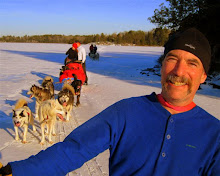
Don, walking it off on a woods trail, mulling over the world's problems.

Wednesday, October 22, 2008

A Fall Day...


The day feels like this picture - A burst of sunlit color as a copse of young maple culminate their year of growth. The maples, being durable hardwood, have driven above the disturbed canopy of apple and aspen. After the struggle to rise above other vegetable growth, nature's competitive quest for survival, dormancy, and a long winter sleep await. For now all is glory for them. Next spring will bring more challenges - among the copse-mates as well as from without. This is what I see adjacent to my woodshed.
We had another hard frost last night . As we go toward winter, many homestead chores must be halted, that is a seasonal surety for me. Time to look and assess with a bit of contentment my world. Our heating wood is in, seasoned and stacked. The chimney extension with its mortar and insulation is nearing completion, with supplies for the rock facade paid for and ready for spring. With the climate teetering on the cusp of cataclysm and the world financial systems receding into crisis, there is assurance that nature's seasons are still guiding my life. What has always been my inspiration and compass - nature - continues on with me a small part of the whole.
Posted by Picasa

Tuesday, October 21, 2008

October Colors Ebbing...


What a fall color tour it has been, close to home in the UP. With so much great colors close to home, we stayed around with a few forays out a few miles. The color change seemed to keep going on much longer than usual. There has been some wind and a bit of rain this fall, but the colors prevailed.
With the presidential campaign in full-on drive, with the Republican John McCain negatively muck-raking (and not finding much) on Democrat Barack Obama, I had some time and did some volunteering at the Houghton Democratic headquarters. McCain has pulled his campaign out of Michigan for weeks now due to polls showing he has lost the state - you would never know it here in the Copper Country. Calls I've made to the older residents in the area show that conservative republican voters are alive and well in the UP.


Lynn with our 2 dogs, Gabe and Dixie, on an autumn walk.


Looking through a fiery maple to the firmament


On the 19th, a sunny Sunday morning, Lynn and I headed into Marquette for a presentation by the Will Steger Foundation on the effects of global warming in the polar regions.The presentation was sponsored by the Superior Watershed Alliance, which I've worked with a bit, learning how to test and sample for water quality of streams. SWA is a sponsor of the Will Steger Foundation. Another organization that I'm a member of is Earthkeepers and I was invited to attend a mid afternoon roundtable with Will Steger where participants would get to know him and talk with him. Lynn dropped me off at the meeting site and I was the 3rd person there. Will talked to our little group of 10 people for close to an hour about his upbringing and 64 year-old life, then he took questions and finally the meeting broke down to informality with simple talk. I had a chance then to talk to Steger about places we had in common and his life now in a houseboat on the Mississippi River.
Lynn was waiting for me in her car and we went looking for a dinner-to-go, as she wanted to have a picnic in a pile of leves at Presque Isle Park looking out on Lake Superior. The food, from Vango's was good and Greek; the large leaf windrow, formed from the wind blowing them to waist-high was soft and warm. After the picnic we drove over to Upfront and Company where the Superior Watershed Partnership meeting was being held. It went on for a long time. I was mentioned by Carl Lindquist and asked to stand as a member of the Partnership who had experience living in the arctic. One of Steger's expedition partners, who was Norwegian talked after Will's slide show on his findings on the impact of global warming. Students talked about the Energy Action Coalition, organizing that is taking place on campuses to influence the start of green industry and awareness of the need for society to change to save our planet and its biological diversity. After a panel discussion by all of the speakers, the evening was over, and we headed out of Marquette and arrived back home at a bit past 11:00.


Lynn relaxing during our Presque Isle picnic.


Will Steger in Marquette

Saturday, October 11, 2008

Autumn Already...


Spirit Tree, North Shore, Lake Superior, Minnesota

What a busy summer it's been! I seldom had time to even think about this blog, but now I will have a bit of time to write, or at least the state of mind to do so. Since my blog is basically to me, I don't feel compelled to write in it regularly. If there is anyone out there who has ever checked this, all I can say is sorry for your futile bother... In looking at my list of posts I noticed that I didn't ever post some in May, simply left them in a saved state. I'll remedy that in short order and the writing and any pictures will appear in back of this entry. After a busy summer of guiding sea kayak trips, life hasn't slowed down all that much. So much left for later at home. My inherent laziness on new projects at home, with winter closing in, leaves me with a lot to do but with basics covered.

Perilous times we are living in politically and economically. A world-wide monetary crisis that is looking more like the Great Depression all the time. Inflation continues to rise here at home. A presidential race getting down and dirty with the Democrats again and again being the brunt of Republican dirty politics. I have been volunteering at the Democratic party office in Houghton, and calls to mostly right wing voters have tested my cordiality. Though I don't agree with the Democrats on some important social issues, these issues pale when I look at the state of the middle class, the environment, the way that the neo-con Republicans have taken our country since Reagan and under Bush for the last 8 years.

We have been having a wonderful color change here in the Copper Country for the last couple of weeks. Now a bit on the ebb as we slide toward late autumn, the vibrancy seems to hold on still. I don't know when I've seen the trees blazing so colorfully for so long.

I've invested in a 27 ton log splitter and have been making short work of hardwood knotty rounds that were so tight grained that maul and wedges were foiled. All but the really old and punky ones (that I gruntingly rolled aside years ago) are going to be burnt in the wood stove like chunks of coal. A new 10 cord logging truck load of sugar maple is being whittled down fast into next years split and stacked fire wood with the use of the hydraulic splitter.

Life goes on...


Posted by Picasa

Saturday, May 31, 2008

May 4 Road Tour of Keweenaw Peninsula

Here it is, mid-Sunday morning and the sun is glinting through the clouds. Time to make a trip the 50 + miles, roundabout to Copper Harbor....


Time to visit pocket parks by the shores of Superior and laze around in the chilly northern air with our parkas zipped up. Finding caddis fly larva in their sand-rough shells on the copper colored rock pools on the shore. A good sign of pure water.


A wonderful time to visit the waterfall running into iced-up Lac La Belle with its full spring runoff flow ...


Let's go up to the top of the Keweenaw's hawk mountain, Brockway Mountain to watch the spring migration of raptors soar on the thermals. Here the trees are squat and stunted, thick and sitting low to the mountain with the wind and snow pruning them there. When the sun shows through and heats the basalt cliffs, the hawks, eagles, falcons, vultures and ravens soar high in unison in the firmament.


Let's hike and beach comb around Hunter's Point , making like joyful tourists on a holiday, taking nothing but pictures: of a water spirit Misshepezhieu, created a million years ago in volcanic basalt of quartz, breathing a fire of and outlined in copper-colored deposits.

Posted by Picasa

May 2008 Boundary Waters Canoe Trip

Ever since I was a student in middle school and beyond I thought and dreamed of the north wood's Boundary Waters. While making a kit canoe from my paper route earnings, writing an 8th grade term paper on canoe methods and technique (the teacher was amazed when she read this book length term paper), reading Sigurd Olson and Calvin Rutstrum's wilderness essays, I've dreamed of canoe travel in the Boundary Waters wilderness. Looking back it seemed as though my youthful paddling was all in preparation to that dream of paddling in the boreal forest's north woods.

As I was out paddling, camping and hiking the Michigan woods and waters I looked at these areas as degraded and less complete than the wilderness Boundary Waters. It seemed as though I was training prior to going into the real thing - the stretch of land from Minnesota's Superior National Forest clear up to Hudson Bay. The boreal canoe country of the Canadian shield was untrammeled compared to the mostly roaded and fragmented Michigan landscape.
Without the means as a kid and with my sights set solely on Alaska as a young man, the time never came when that Boundary Waters canoe trip wish was fulfilled.

I remember reading the Wilderness Society's Living Wilderness periodical about the long fight to save the Superior Quetico Wilderness from a host of resort owners, mining companies, loggers, fly-in fishing operators and motor sport operators. This fight became big in my wilderness-minded heart, and it was good to hear that in the end the forces of good wilderness management mostly won. The tranquility and primitive values of the Wilderness Act of 1964 were upheld.

After working as a dog sled guide in and around the Boundary Waters for the last few years I still hadn't paddled there and never seemed to have the time with a family and guiding sea kayak trips in the summer. Then a friend who I guided with at Wintergreen Dog Sled Lodge, Steve Eisenminger, knowing that I had long wanted to paddle there, invited me to go up on the Knife Lake region to scout out a possible guided spring trip for Lake Trout that he wanted to get together. Steve has guided for many years on fishing trips, through a lot of Quetico-Superior. With his experience I had little doubt that the trip would be fun.

Our trip started on May 13. The weather was cloudy and threatening rain as we left the landing in Steve's loaded 17 foot Bell "Northwoods" Royalex canoe. The ice had just gone out on the lakes a week previously on this cold spring of 2008. There was definitely some activity at the boat landing parking lot and we saw 4 motorboats on the duration of moose Lake. One was a shuttle boat that was on its way to transport canoeists back to the landing, probably from a portage at the end of the motorized route on Moose.

The rain began soon after we left the landing and it wasn't long afterward that we passed two paddlers who had been out a week previous, who were weary of getting snowed on in the stormy weather of that past week; they were heading home.
Our route was to go from Moose to New Found Lake to Sucker to Birch Lake to Melon Lake to Knife Lake.It rained intermittently most of the way to the Knife. The rivers between the lakes were roaring over their banks and the five portages had overflow from the rivers running in them, some of it calf deep, the remnants of the winter's snow were still present. I was glad to have on my knee high Extra-Tuf rubber boots. I learned a lot about the paddling in the Boundary Waters; on the way up to the Knife; why the best canoes to have are also the lightest. I thought that a durable Royalex canoe was the way to go there, but I learned that whenever you run into rocks and rapids that there is a portage trail so light gear for the portages is more important than heavy and bomb proof.
It didn't take long on the Moose to get into the team paddling that would become synchronized for the whole trip. Steve, in his good natured way told me twice to quit trying to steer from the bow. I was so used to paddling solo or in the stern, and always steering that it took me awhile to let him steer and to just paddle steadily and keep an eye peeled for rocks and other obstructions.

I was glad I could set the paddling pace and keep it because,on the portages, I was definitely the lightweight on load bearing. Steve had a huge waterproof portage pack that carried all of his and his dog Brook's gear. Usually I helped him put it on as it was too heavy to slip into unless it was up at torso height. I brought my gear in a medium size Duluth pack and a medium size waterproof portage pack. We would do each portage in 2 trips. Steve talked about Aaron Chick, who is a jack of all woods trades around Ely. Aaron disdains doing 2 trips on a portage trail and will pack a canoe as well as his pack on one trip. My back can't take the strain any longer, hence ultra light is the way to go for me. I remember portaging my Grumman 19 foot freight canoe when I had to, on the Yukon. That and numerous other youthful excesses all helped to create wear on my backbone discs.
Steve surveyed campsites that would be good for an early spring fishing trip that he may offer next spring that would base out of the area that we stayed in.
Even though the trip was soon after ice-out, there were perhaps 3 parties of people who were paddling and camping in the area we were in already. I was glad that my first paddle trip in the boundary Waters was in early spring so as to avoid the summer crowds.

We ended up paddling back to the Moose Lake entry point with skies threatening rain with a bit of sun. When we were a couple of miles from the parking lot, rain backed by northwest wind made us paddle more vigorously for our takeout point.


A spring-clear morning for paddling on the Knife. All ice is newly off the lake system and the warblers are back and singing.


Morning light just returning as Steve and his setter Brook enjoy breakfast and a misty sunrise. With the fire rings and plentiful "beaver pile" wood, we were enjoying campfires morning asnd night. Much different than most national park wilderness areas where gas pack stoves are mostly used.


Don with our Lake Trout dinner. We portaged into Topaz Lake and caught 2 Lakers in short order.


This is a portage trail up by the Knife River while we were on our way back. The running water was down to a trickle with puddles left from a few days before. The snow was all melted out due to the warm rains that we had on our way in... The rivers between the lakes were roaring over their banks and the five portages had overflow from the rivers running in them, some of it calf deep, the remnants of the winter's snow were still present.
Posted by Picasa